AI and Accessibility Panel
1:15 pm - 2 pm · Room 1
Artificial intelligence is reshaping how products are built, how content is created, and how people interact with technology. For people with disabilities, that shift carries both promise and risk. AI can remove barriers at a scale that manual processes never could, but only if accessibility is part of how these systems are designed from the start. This panel brings together researchers, product leaders, and technologists working at the intersection of AI and accessibility to explore what it actually looks like to build AI systems with inclusion at their core. The conversation will cover how AI is being used today to create more accessible content and experiences, where it falls short when accessibility is treated as an afterthought, and what inclusive design principles mean when applied to machine learning and automation. Panelists will share what they are learning from their own work and examine the gap between AI's potential for accessibility and what it delivers for people with disabilities in practice. The discussion will also address the role of standards and policy in shaping how AI systems account for the full range of human diversity.
Speakers
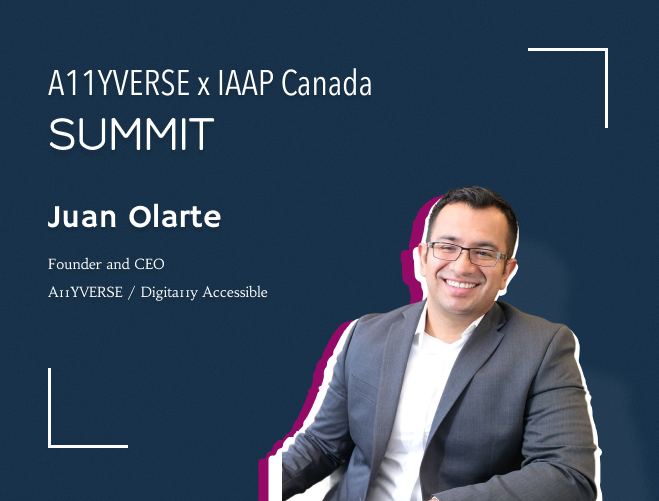

David Dame
Senior Director, Product Accessibility & Human Centered Design for Windows and Devices, Microsoft
David Dame is the Senior Director of Human Centered Design at Microsoft, where he leads the strategy, design, and delivery of inclusive, human-first experiences across Windows and Devices. A product maker at heart, David has spent more than 30 years helping build and scale technology used by millions of people around the world. His work sits at the intersection of design, engineering, accessibility, AI, and organizational change. David has led the creation of shipped products and platforms including Microsoft Adaptive Accessories, the Surface Adaptive Kit, Inclusive Trackpad, Bold Keyboard, and the Inclusive Tech Lab. These are not concepts or prototypes - they are real products designed to remove friction and expand what is possible for people. David lives with cerebral palsy. That lived experience gives him a firsthand understanding of where technology breaks down and how thoughtful design can unlock independence, dignity, and opportunity. It shapes how he leads, how he builds, and how he challenges teams to think differently. He believes human centered design is not about empathy alone - it is about outcomes. When we design for the edges, we improve the experience for everyone. Accessibility becomes innovation. Inclusion becomes a growth strategy. Before Microsoft, David held senior leadership roles at Scotiabank, OpenText, PTC, BlueCat Networks, and MedShare, leading large-scale agile and organizational transformations across global enterprises. He is a TEDx speaker, Professional Scrum Trainer, Certified Six Sigma Black Belt, and the author of the upcoming book Leading with Imperfect Feet, which explores leadership, resilience, and designing systems that adapt to people instead of forcing people to adapt to systems.
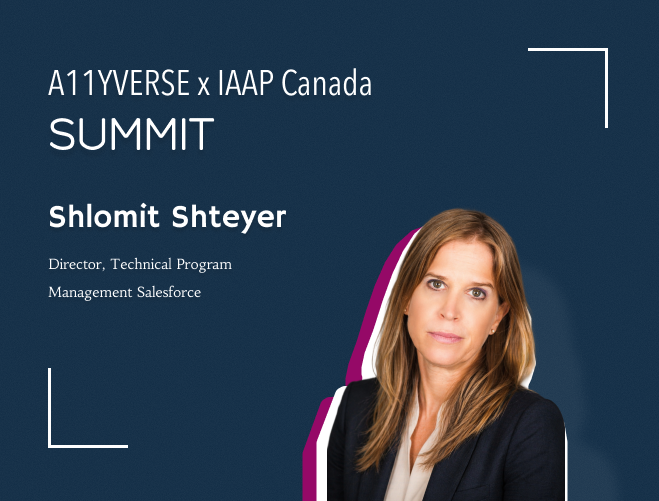
Shlomit Shteyer
Director, Technical Program Management, Salesforce
Shlomit Shteyer is a Director of Technical Program Management at Salesforce. She has a decade of experience in driving software programs from strategy to successful delivery, having worked in multiple countries and at different sizes of companies. Prior to Salesforce, she worked for Twitter where she was introduced to the product accessibility space. Since then her focus has been to operationalize the accessibility strategy portfolio as part of the journey to ensure the company products are accessible to all. She is very active with the TechWomen program, mentoring the next generation of women leaders in STEM from Africa, Central and South Asia, and the Middle East. She joined Salesforce in 2022 to the cross-cloud TPM team as a technical program manager driving the product accessibility portfolio programs.
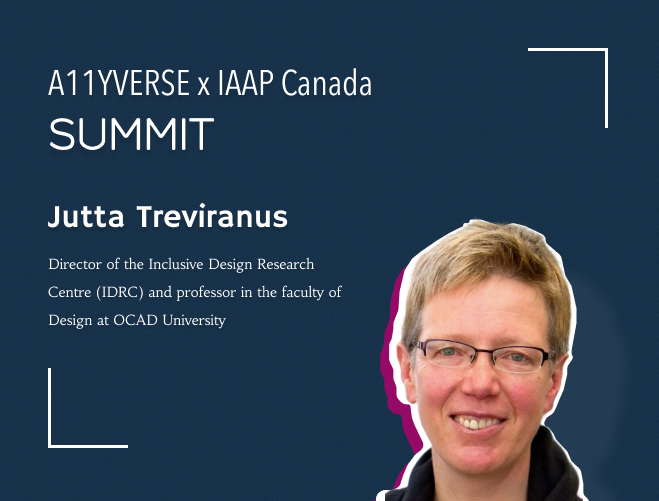
Jutta Treviranus
Director, Inclusive Design Research Centre (IDRC), OCAD University
Jutta Treviranus is the Director of the Inclusive Design Research Centre (IDRC) and professor in the faculty of Design at OCAD University in Toronto. She established the IDRC in 1993 as the nexus of a growing global community that proactively works to ensure that our digitally transformed and globally connected society is designed inclusively. Dr. Treviranus also founded an innovative graduate program in inclusive design at OCAD University. Jutta is credited with developing an inclusive co-design methodology that has been adopted by large enterprise companies as well as public sector organizations internationally. Jutta has coordinated many research networks with and by people with disabilities. Jutta was recognized for her work in AI by Women in AI with the AI for Good, DEI AI Leader of the Year award as well as by Women in AI Ethics. She is the chair of the Accessible and Equitable Artificial Intelligence standards committee for the Accessible Canada Act.

Eugene Woo
Venngage
Eugene is the CEO of Venngage, a design platform that helps organizations produce accessible documents at scale. He focuses on moving accessibility upstream, shifting from remediation to creation with built-in checks, templates, and governance. His team partners with public sector and higher-ed institutions to standardize accessible-by-default outputs across departments.