A11YVERSE Spotlight: Redefining who belongs in science
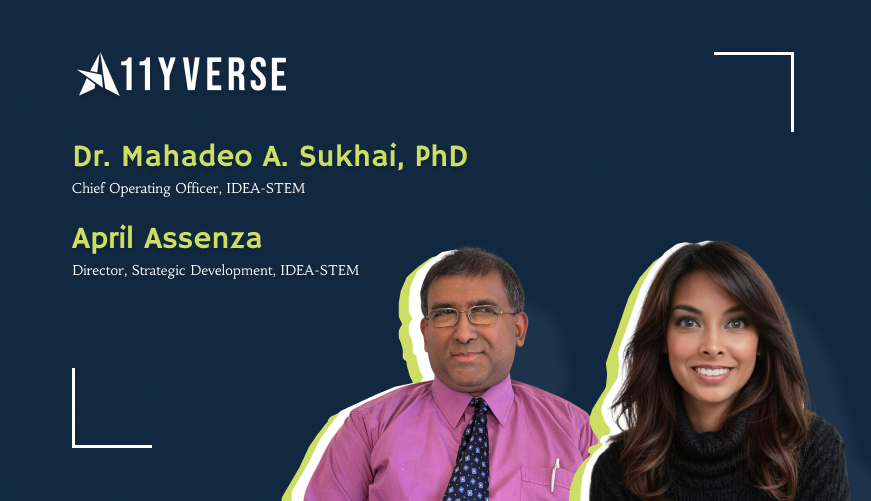
A11YVERSE Spotlight Redefining who belongs in science This is the latest edition of the A11YVERSE Spotlight newsletter. Our goal is to share real stories from people and organizations who are moving accessibility forward in meaningful ways. IDEA-STEM is one of those organizations. Where it started In 2014, Dr. Mahadeo Sukhai and Ainsley Latour collaborated on a national research project exploring the experiences of graduate students with disabilities in STEM. Both were scientists. Both were people with disabilities. What they found in the data confirmed what they had already been living for years. The systems that train scientists, fund research, and employ healthcare professionals were not designed to include them. From research project to movement Originally, the idea was a centre of learning that would teach science inclusively. Then COVID-19 happened. The pandemic exposed every fault line that had always existed in healthcare and education. Access to testing. Access to vaccines. Access to learning that had suddenly moved online. In 2020, Mahadeo and Ainsley decided the response had to be bigger. They founded IDEA-STEM as a consulting and higher education firm, transforming years of research and lived experience into action. What IDEA-STEM does IDEA-STEM works with universities, hospitals, research bodies, and employers. They help organizations embed accessibility and anti-ableism into how they operate, hire, teach, and deliver care. Their approach is built on a core belief: "Access is collective, care is non-coercive, and inclusion should never require assimilation." Representation is a starting point, not a destination. IDEA-STEM coaches teams through the harder work of actually changing how they function. The team behind the work Dr. Mahadeo Sukhai, the world's first congenitally blind geneticist, serves as Chief Operating Officer. He brings over 25 years in the medical sciences and is a national leader in inclusive employment. Ainsley Latour serves as Chief Executive Officer. A hard of hearing, neurodivergent scientist, she has presented her research on disability in STEM at national and international forums. April Assenza serves as Director of Strategic Development. A mental health consultant with over 15 years across the health and non-profit sectors, April draws from her own lived experience navigating mental health challenges to shape IDEA-STEM's work on trauma informed environments. She has led the development of national programs, redesigned high impact signature events with accessibility at the forefront, and built strategic collaborations that embed well-being and equity into organizational culture. Her ability to blend empathy with execution has helped IDEA-STEM grow into an organization that is actively shaping how inclusion is practiced across industries. Why this matters Inclusion is not a policy. It is a practice. And it has to be built, not declared. IDEA-STEM is not asking organizations to do more. They are asking them to do differently. Inviting disabled people into rooms that were not built for them is not the same as building rooms where they belong from the start. That is the work IDEA-STEM is doing. Room by room. System by system. Read the full A11YVERSE Spotlight on IDEA-STEM at a11yverse.com. A11YVERSE x IAAP Canada National Accessibility Leadership Summit The first A11YVERSE x IAAP Canada National Accessibility Leadership Summit is taking place on June 8, 2026 at Deloitte Toronto. The day brings together accessibility leaders, innovators, and organizations for a full program of keynotes, panels, and ecosystem conversations across AI, investment, and inclusive innovation. Capacity is limited to 200 attendees. View the full agenda and register at a11yverse.com. Explore more Spotlights IDEA-STEM is one of a growing number of stories on A11YVERSE. Discover how practitioners, founders, and organizations are solving real accessibility challenges at a11yverse.com/spotlights. Join A11YVERSE A11YVERSE is free and open to anyone working in or entering the accessibility space. Create your profile and become part of the ecosystem at a11yverse.com.